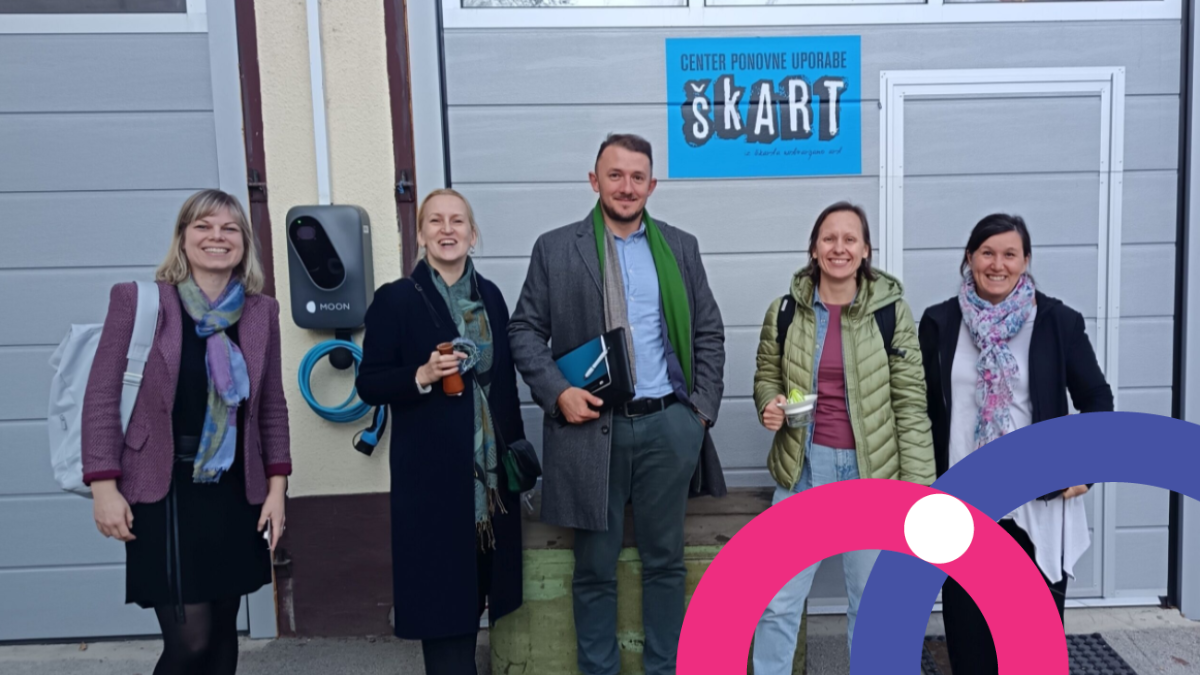
Three years have passed since the municipalities of Bled and Gorje (Slovenia) successfully passed their first audit to obtain the international Zero Waste Cities Certification by the Mission Zero Academy. After becoming the first certified zero waste municipalities in Europe in 2022, November 2025 has confirmed the continuation of their waste reduction commitments and circular practices.
External experts from Croatia, Germany, and Estonia audited the progress of Bled and Gorje since 2022. The findings show that waste management remains an important priority for both municipalities, but that further progress will require greater effort and stronger measures. Bled and Gorje both retain their 2/5-star scores, considered a solid basis for additional development.
“The recertification proves that Bled and Gorje are on the right track, while also clearly showing that zero waste is not a one-time achievement, but a long-term process of continuous improvement,” highlighted Bled and Gorje’s mentors from Ekologi brez meja.
The large number of tourists attracted by Bled and Gorje remains a top challenge due to its increased environmental footprint. To address this, the municipalities will increase awareness-raising activities and involve visitors in protecting the local environment, especially regarding proper waste management. They will also increase their cooperation with cafes, restaurants, and hotels; as well as enforcing greater waste prevention, reusable packaging, and consistent waste separation at public events.
“Mixed municipal waste is on the rise again. To achieve environmental goals, it will be necessary to consider a deposit system and the elimination of single-use packaging in retail chains and fast food outlets. In Bled, we have 66% of separately collected waste, and 73% in Gorje. The tourism sector, with around 10,000 overnight guests and 30,000 day visitors during high season, contributes as much as 30% of all waste, while the financial compensation is negligible compared to the ecological footprint. Around Lake Bled alone, we collect around 10m3 of waste per day during high season, so we are considering setting up two ecological islands that would operate with the support of artificial intelligence,” explained Janez Resman, Director of the municipal company Infrastruktura Bled, on the challenges of waste management.
The Mayor of Bled, Anton Mežan, highlighted that caring for natural resources is part of the DNA of most locals, while visitors must be constantly made aware of sustainable practices. “Caring for nature is our fundamental task, as it is precisely our natural resources that have earned Bled its global reputation. With this in mind, we approach the development of the area and make decisions that will preserve Bled in its current form for future generations. Individuals in Bled generate 10% fewer waste than the Slovenian average, but the tourism sector also has negative consequences, which are reflected, among other things, in the growing amount of waste. I believe that examples spread fast. With persistence, we can trigger a snowball effect among visitors, who will come to see sustainable behaviour as the standard for this destination’’.
The Zero Waste Cities Certification was developed by Mission Zero Academy, drawing on over a decade of on-the-ground learning from the Zero Waste Europe network. The Certification encourages European cities and municipalities to systematically reduce waste and bring the circular economy to the local level. Its regular audits provide an opportunity for an objective review of progress and opportunities for improvement.
Bled and Gorje are also focusing on textile waste. The municipalities are part of STICT – Strengthening the Implementation of Circular Strategies for Textiles in the EU, a two-year European project to establish good practices for reducing textile waste.
Last year, Bled Infrastructure monitored the quantities of textiles deposited at the collection centre and in containers for the first time their route, final destination, and reuse volumes. Bled and Gorje collect 44.3 tons of textile waste annually, meaning that each resident discards 4.1 kg of textiles. The municipalities are organising multiple events in 2026 as part of the STICT project, including clothing exchanges and the Reuse Festival.