Being able to show customers that your business takes environmental action seriously is increasingly valuable. But from 27 September 2026, new EU rules will also make it more important that the claims and sustainability labels businesses use are credible and properly substantiated.
There is a good reason for the change. A 2020 European Commission study found that 53.3% of environmental claims examined in the EU were vague, misleading or unfounded, while 40% had no supporting evidence.
The EU Empowering Consumers for the Green Transition Directive (EU) 2024/825 aims to change this. Among other measures, it restricts vague environmental claims and sustainability labels that aren’t backed by appropriate certification schemes. For businesses, particularly SMEs without dedicated sustainability teams, this makes communicating environmental achievements more challenging and more important than ever.
What does this mean in practice?
In short, terms such as green, sustainable or environmentally friendly can no longer simply be used as broad marketing messages without appropriate substantiation. The new rules also address the proliferation of sustainability labels and logos, including environmental badges organisations design themselves.
A credible certification provides businesses with something much stronger: clear criteria, measurable performance, independent verification and a recognised framework for communicating results.
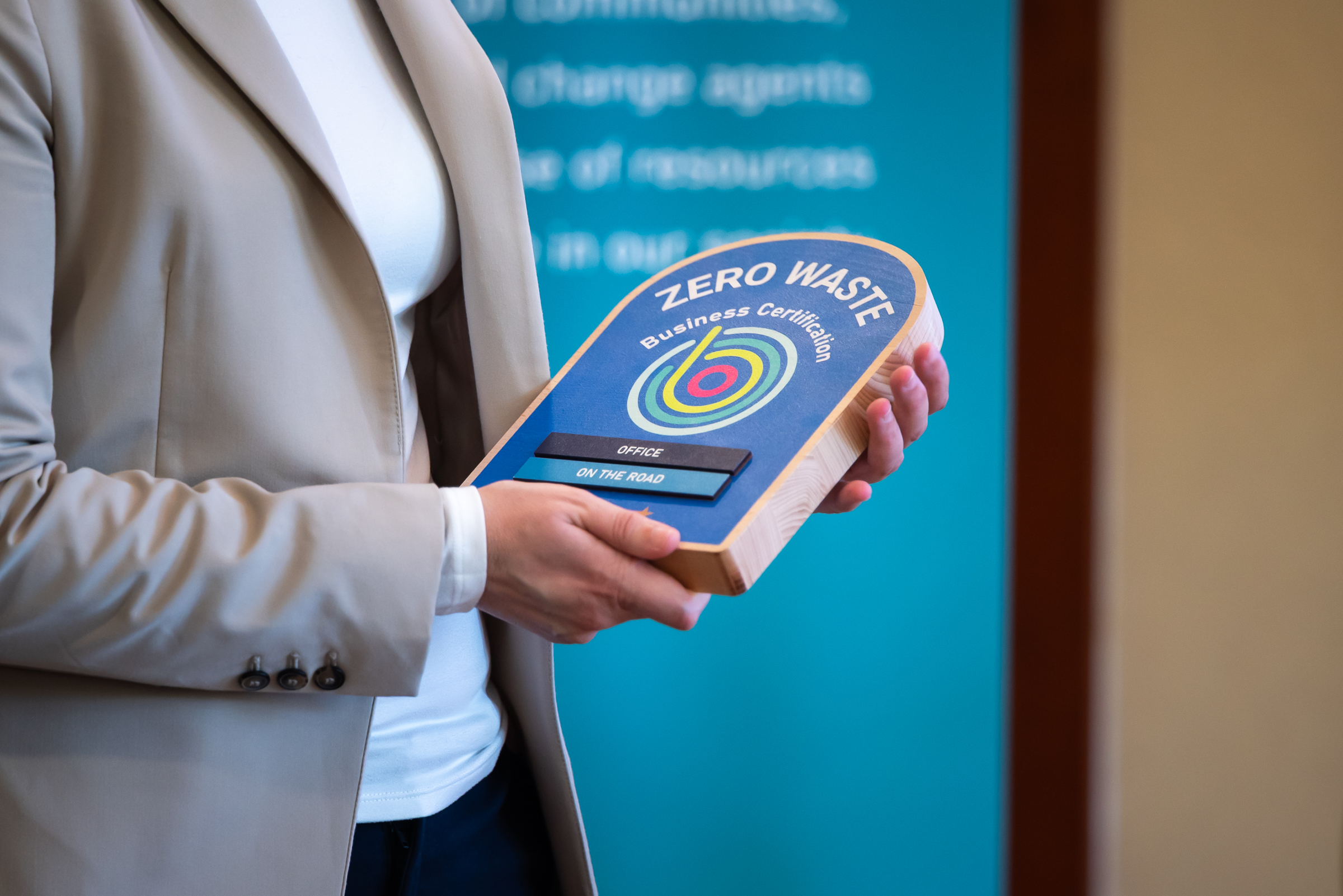
The Mission Zero Academy Zero Waste Business Certification has been designed with these principles at its core.Certification is awarded following an audit conducted by an independent, trained and accredited third-party auditor. MiZA reviews the audit report before issuing certification, while Zero Waste Europe oversees the scheme and retains the right to challenge or reject certifications where appropriate. Businesses report progress annually and continue to be monitored. This means businesses must already demonstrate performance that exceeds both legal minimum requirements and average industry practice before achieving certification, while still having clear opportunities for continuous improvement.
The certification requirements are publicly available, and the criteria are designed to recognise performance that goes beyond simply complying with existing legislation. The certification takes a comprehensive view of waste and resource management across the business, including different waste streams, procurement practices and relevant upstream and downstream waste, making it more comprehensive than just what ends up in the bin on the premises.
In other words, the Zero Waste Certified claim has a clear meaning and evidence behind it. Exactly as the directive intends.
The ripple effect of the law is already raising the bar
For hotels and other tourism businesses, choosing the right certification can affect more than your own communications.
Major tourism platforms are increasingly focusing on independent third-party certifications. Booking.com, for example, has moved away from displaying its own Travel Sustainable levels and now highlights properties with third-party sustainability certifications, including allowing travellers to filter for certified accommodation.
For a small hotel, hostel, campsite or other tourism business, this creates a strong practical reason to look carefully at certification. A sustainability logo is only valuable if customers and the platforms connecting you with those customers can trust what is behind it.
How to get started: a practical checklist
The new rules don’t mean you should stop talking about your environmental work. They mean it is time to communicate it more confidently and credibly.
Here are five good places to start:
1. Check your existing environmental communications
Look through your website, social media, brochures and booking profiles. Are you using vague terms such as“sustainable”, “carbon neutral”, “green” or “environmentally friendly”? Check whether you have sufficient evidence for the claims you make and whether you can make them more specific. Communicate about your practical actions and their results, not generic ambitions.
2. Check who is behind a certification
Not every certification offers the same level of independence. Who runs the scheme, and who actually conducts the audit? Be particularly careful where the same commercial company advises businesses on what to do and then certifies its own clients. Look for transparency and genuine third-party verification.
3. Read the criteria
Can you actually find the certification requirements? Are they publicly available and understandable? And, importantly, do they demand performance beyond the bare minimum required by law?
If it’s difficult to understand what a business had to achieve to receive a label, customers may have the same problem.
4. Get started. Help is available
Certification doesn’t mean you need to have everything perfect on day one. MiZA’s approach is designed around continuous improvement, helping businesses understand where they are today and where they can realistically go next.
5. Treat the audit as a checkpoint, not a source of stress
An audit isn’t an exam designed to catch you out. Think of it as a checkpoint and a chance to celebrate what you have achieved, while identifying your next opportunities for improvement.
For small businesses especially, certification can turn sustainability from a confusing collection of actions into a structured journey.
And with Europe’s rules on environmental communication becoming stricter, having credible evidence behind your environmental achievements isn’t just good sustainability practice. It’s becoming good business practice too.
Ready to Understand What the New Rules Mean for Your Business?
The changes introduced by the EU Empowering Consumers for the Green Transition Directive will affect how businesses communicate environmental achievements and sustainability credentials.
If you’re unsure whether your current claims, labels or certification approach will meet future expectations, we’re here to help.
Book a free introductory call with our team to discuss:
- Your current sustainability communications
- Whether your existing certification provides sufficient assurance
- The requirements of the Zero Waste Business Certification
- Practical next steps for your organisation
Book your discovery call today and explore whether Zero Waste Business Certification is the right fit for your business.